|
|

From Hawaii to Florida: A Week at Earthlaw
TO: Friends and Supporters
FROM: Mark Hughes, Executive Director
DATE: November 8, 1999
It's hard to give people a good idea of what things are like around here. To say that we are hopping, busy, or even going berserk, although often true, doesn't really capture what it's like around here.
To give you some idea, here are some of the fun things that happened this past week:

As you know, we have been battling to protect Haleakala National Park, on Hawaii's Maui. Haleakala is a fantastically rare and beautiful place, constantly besieged by foreign species carried onto the island by travelers. The FAA approved an airport expansion that will accelerate the problem by permitting non-stop flights from California and Japan. Debbie Sivas, and our Stanford Clinic students, challenged the project last March. (There's more information about this issue -- and pictures -- in an earlier newsletter.)
Last Wednesday, Debbie argued the case before the Ninth Circuit Court of Appeals and did a great job. You can get some of the flavor of an argument like this from the enclosed press report. It describes some of the Court's comments, the government's defenses, and Debbie's responses.
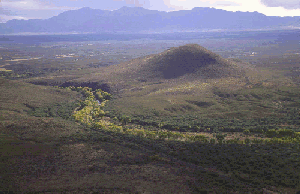 We may finally have turned the corner in our efforts to save Arizona's last real river -- the San Pedro -- from the attacks of the U.S. Army.
Obviously, rivers in the middle of a desert are rare. The San Pedro is rarer still since it is the only river in Arizona that hasn't been dammed, diverted, or pumped dry.
The San Pedro is also home to an astonishing number of different plants and animals. Nearly half of the bird species in North America spend time along the San Pedro. It supports the second highest number of different mammals in the world -- behind only the forests of Costa Rica!
The biggest threat to all this is the U.S. Army. The Army keeps expanding its base on the San Pedro. The Army increases the size of its base, attracts more people to the area, supports burgeoning development, and is responsible for pumping a lot of water from the aquifer that supports the River. (There is now a "dry spot" in the aquifer. This "hole" threatens to capture the River -- it may already be doing so.)
Last Friday we learned that our three lawsuits -- and an international investigation we triggered using NAFTA -- may have finally gotten through to the Army. According to press reports, the Army has "committ[ed] . . . to protecting the San Pedro River from increased ground water pumping." If this is true -- and enforceable -- we may have saved the River. (And how often does a person get to do that!?) The first press report is attached.
Today, we received the news that we had won a victory in our efforts to protect fish populations in the Gulf of Mexico from the shrimp trawling industry.
Trawling for shrimp might be the most wasteful fishing practice in the world. In many areas, only 20% of what shrimpers catch is actually shrimp. The shrimpers discard the remaining 80% -- including red snapper, mackerel, and croaker -- dead or dying.
The 80% that is wasted is called "bycatch" and a large part of it is absolutely unnecessary. Shrimpers can add "bycatch reduction devices" to their nets. These devices, although they reduce bycatch by about 50%, do not reduce the shrimpers' catch.
Nonetheless, shrimpers challenged a federal rule that requires shrimpers to add bycatch reduction devices to their nets. We intervened in their suit to make sure that the requirement stayed in place.
On Wednesday, U.S. District Judge Robert Hinkle rejected the shrimpers' case. The bycatch reduction rule will remain in force. (Center for Marine Conservation's press release is attached.)
|
