

 Airplanes and Biodiversity - Saving Haleakala National ParkTO: Friends and Supporters FROM: Debbie Sivas, Staff Attorney DATE: March 20, 1999 Chainsaws toppling centuries-old trees. Bulldozers scraping the surface of the earth. Water projects converting living rivers into desiccated gullies. This is what most people think of when they think of destroying native plants and animals. Very few think of airliners and the convenience of non-stop flights. Yet airliners are what may ultimately destroy what many believe is our most beautiful National Park -- Haleakala National Park on the island of Maui. 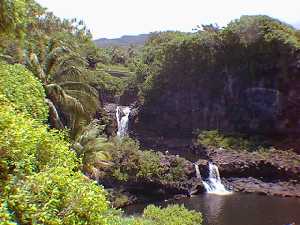 This is the reason we brought an action on behalf of the National Parks and Conservation Association and Maui Malama Pono, a Hawaiian grassroots organization that promotes slow growth, to block the creation of an international airport on Maui. Haleakala is indisputably one of our most beautiful and precious places. The Park contains amazing things -- coral reefs, grasslands, shrublands, dry forests, bogs, alpine cinder deserts and the most pristine example of an intact rainforest in the United States. 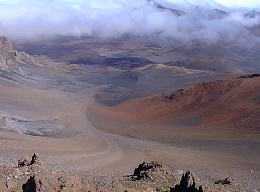
Haleakala protects more imperiled species than any other national park -- 6 endangered bird species, 12 endangered plant species, and many rare invertebrate and plant "species of concern." Some 90 percent of the Haleakala's 650 plant species and 800 invertebrate species live only on the Hawaiian Islands. Eight forest birds reside only within the Park's borders. It's little wonder that the Park has been designated an International Biosphere Reserve. Time and isolation created this vast number of unique creatures. Hawaii is over 2,000 miles from the nearest continent. For millions of years, the plants and animals in Haleakala evolved separately from those on the mainland. This has made Haleakala's creatures extremely vulnerable to plants and animals from the outside. On the mainland, natural predators would control these aliens. In Haleakala, with those natural predators 2,000 miles away, plants and animals from the mainland have gone bezerk. Over three dozen plant and animal species are now established in Haleakala -- feral pigs and goats consume the native plants, ants and wasps destroy the native invertebrates, and aggressive grasses, ferns, and trees push out their native counterparts. Keeping alien species out of Haleakala is the only way to guarantee protection of its native creatures, since it is nearly impossible to foresee how alien species might affect the natives. Seemingly insignificant and inadvertently introduced species can have tremendous consequences. For example, the beautiful silversword is imperiled by two recently introduced insects. Yellow jackets, accidentally introduced in the 1970s, and Argentine ants, which became established in silversword habitat in the 1980's, prey on the silversword's pollinators, impairing its ability to reproduce. 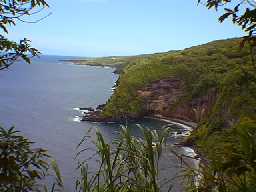
Years ago these invaders came by boat, today they come by plane. The greatest source of alien species is Hawaii's international airports. Every year many new alien species slip through the elaborate safety net set up to stop them at Honolulu International Airport -- on neighboring Oahu. The expansion of Maui's Kahului Airport poses a grave new danger to Haleakala's rich biological diversity. Maui does not currently have an international airport. Visitors to Maui fly from the mainland to Honolulu and then take a local flight from Honolulu to Maui. The airport expansion will allow tourists to fly directly from any of the seven continents to Maui. The Park Service opposed the expansion, because of the threat it poses to Haleakala. Despite the Park Service's protests, the Federal Aviation Administration ("FAA") approved the airport expansion with barely a nod to the danger posed by alien species. The FAA, catering to local political interests, refused even to evaluate how the FAA might condition its approval of the expansion to protect the Park. In approving the airport, the FAA managed to violate various parts of three different federal laws. We are asking the federal court to undo the illegal and ill-conceived approval. While globalization will no doubt proceed apace, we hope to help preserve this little piece of the globe for the hundreds of indigenous species that live there and the future generations of humans that will surely go to visit. |
|
| |||
|---|---|---|---|
|
| |||